
The Science Team
The Taylor Park AMG Science Team collaborates with Forest Service leadership and the AMG to ensure the project is informed by the best available science. The Science Team completes on-the-ground monitoring pertinent to questions about the project as well as cultivating an in-depth understanding of the forest structure, age class, health, and wildlife patterns in Taylor Park.

In December 2018, a Science Team associated with the AMG was initiated through a partnership with Western Colorado University’s Center for Public Lands for the Forest Service’s Taylor Park Vegetation Management project. The Science Team collaborates with agency leadership and the AMG to ensure the project is informed by the best available science. The Science Team completes on-the-ground monitoring to answer pertinent ecological and management questions, and to cultivate an in-depth understanding of the forest structure, age class, health, and wildlife patterns in Taylor Park.
About the Science Team
The Science Team conducts monitoring to support the Forest Service in general understanding and drive changes to the project, when and where needed. This increases understanding of treatment effectiveness in meeting stated objectives, including landscape scale reductions in fire risk and increases in forest health and resilience. This collaborative, adaptive management strategy promotes a strong working relationship between Forest Service managers, researchers, and stakeholder groups.
The monitoring project will also integrate with parallel efforts on the GMUG forests, such as those conducted by the Spruce Beetle Epidemic and Aspen Decline Management Response team. The Science Team began monitoring conditions in Taylor Park in the summer of 2019. Baseline monitoring includes seedling and sapling counts, tree coring, mistletoe presence and absence data collection, camera traps set for big game, small mammal trapping, and breeding bird point counts.
Note that while monitoring provides information about the Taylor Park area, it can take time for these studies to inform adaptive management strategies, depending on questions of interest. Just as the overall adaptive management approach includes designing and executing actions when outcomes cannot be fully predicted, then monitoring efforts, so too does the Science Team carry out efforts based on best-available but developing science with the goal of adding to the field of forest ecology more broadly while improving management effectiveness in Taylor Park. As such, monitoring activities are intended to be conducted annually over the duration of the Taylor Park project — and beyond.
-
Taylor Park has been selected as a study site in the Adaptive Silviculture for Climate Change (ASCC) Network. The goals of this project are to test different silvicultural approaches to climate change adaptation that will also serve as useful examples across the U.S. and Canada.
A team of natural resource specialists from the Taylor Park region, regional managers, and scientists came together for a three-day workshop in July 2022 to develop the study design for the ASCC project site.
Monitoring and data collection are essential components of the ASCC study. ASCC incorporates a rigorous experimental design that facilitates high quality scientific assessment of treatment effects, and contrasts between different treatments. Research partners from several institutions are working together to investigate the effectiveness of different silvicultural treatments aimed at promoting ecosystem adaptations. Research questions may include:
Effects of forest thinning on tree growth and survival, particularly under future droughts and warming.
Contrasting the growth and survival of seedlings of a range of different tree species as a function of shading, microclimate, and climate variation.
Treatment effects on snow hydrology including canopy interception, snowpack accumulation and retention, soil moisture, and tree sap flux.
Responses of wildlife, insects, and understory vegetation to treatments.
-
The Science Team conducted a range of monitoring activities in collaboration with the AMG and GMUG in 2021. Objectives included:
Further develop the network of sample sites in anticipation of proposed treatments. This included the addition of sites in additional forest types of planned treatments, depending on AMG and USFS interests.
Bring a suite of sites into the Applied Silviculture for Climate Change (ASCC) network, following the collaborative development of new silvicultural strategies that could be implemented in a portion of the project area under the current EA. Plan for additional measurements at the current plot network, including measures of biota including understory vegetation and soils and fungi, in partnership with Western faculty. Install dataloggers.
Given interests from AMG members, the Science Team initiated monitoring to quantify temporary road use within the project area, possibly including a combination of trail cameras and/or vehicle counters.
Also following AMG member concerns, a long-term hydrological study that could incorporate measures of snsow water equivalent, soil moisture, streamflow, and hydrological modeling was developed. This initiative is in its infancy and contingent on interest and support from multiple partners and collaborators, thus did not lead directly to monitoring activities this year.
The Science Team continued to communicate findings and collaborate with AMG members and GMUG staff, including providing findings from 2020 field efforts and additional work to best provide relevant information to USFS staff, AMG members, local stakeholders, and the public at large.
-
The Taylor Park AMG Science Team focused on one objective during 2020. This was to develop a permanent monitoring plot network to allow contrasts of key indicators between pre- and post-treatment conditions, and between different treatments and controls.
A network of 47 permanent monitoring plots within mature lodgepole pine stands in the Taylor Park project area were established. These represent 15 plots planned for clearcut timber harvest, 15 for stand-replacing prescribed fire, and 17 controls that fall outside of any planned treatments. Plot design was modified from the SPEADMR Science Team's monitoring plot protocol. Data was collected on forest structure and composition, seedling densities, fuels, and mistleoe presence. Additionally, temperature and rH sensors and dataloggers were installed at 40 plots to characterize understory microclimate in anticipation of changes associated with scheduled treatments.
To view complete objectives and results of the Science Team's 2020 monitoring efforts, click here.
-
The Taylor Park AMG Science Team focused on three primary objectives during 2019. These included:
completing a baseline field inventory of conditions in lodgepole pine stands in the proposed Taylor Park project area;
conducting a public survey assessing perceptions of forest management in the area; and,
working with the AMG and GMUG staff to provide information, communicate findings of interest, and facilitate the development of scientifically-informed adaptive management.
To view complete objectives and results of the Science Team's 2019 monitoring efforts, click here.
This work was supported Western's Masters in Environmental Management students Gabby Zaldumbide and Noah Hellmund's graduate research that included a preliminary survey of wildlife use in historically harvested and non-managed stands, public survey on perceptions of forest management in the area, and an assessment of fuels in the Tincup area.
View Gabby’s final project here.
View Noah’s final project here.
Meet the Science Team
-

Dr. Jonathan Coop
Dr. Jonathan Coop’s teaching and research interests revolve around the ecology, dynamics, conservation, and restoration of plant communities and landscapes in the southern Rocky Mountains. He works with students to explore how disturbance regimes, climate, and spatially-structured abiotic gradients interact to shape diversity, community composition, and landscape dynamics, human influences on ecological systems, and management for a future of certain change but of a less than certain direction and magnitude.
-

Amy Eaton
Amy Eaton has a B.A. in Environmental Studies from St. Mary’s College of Maryland and a Master’s in Environmental Management from Western Colorado University. Amy’s work was centered around landscape-scale natural resource management. Specific interests include exploring human-nature interactions, particularly as they relate to Wilderness management, forest health, and sustainable recreation.
-
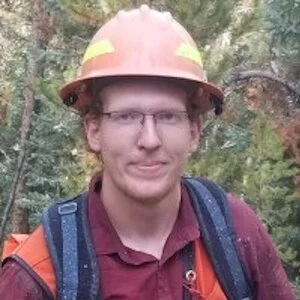
Noah Hellmund
Noah Hellmund received a B.A. in Environment and Sustainability and Master’s in Environmental Management degree with an emphasis on public lands management from Western Colorado University. Noah’s work was centered on forest management and adapting management practices to increase resilience to wildfire. Noah has a diverse skill set built on a foundation of Wildland Firefighting and Environmental Education. He has worked in natural resource management for federal, private, and nonprofit entities across 7 different states.
-

Gabriela Zaldumbide
Gabriela Zaldumbide earned her Bachelor of Science degree at University of Wisconsin - Madison where she majored in Wildlife Ecology and received an Environmental Studies Certificate. She then received a Master of Environmental Management degree at Western Colorado University. In the past, she has worked for the U.S. Geological Survey, actively volunteered for the Wisconsin Department of Natural Resources, and interned for the Wildlife Management Institute. Gabby administered a survey to Taylor Park residents to gauge their knowledge of the Taylor Park environmental assessment and wrote a comprehensive monitoring plan for the Taylor Park forests affected by the assessment.